Labor cost-of-living pressure is intensifying, with Prime Minister Anthony Albanese ruling out cuts to hospitals and schools but conceding that savings will be needed in December’s mid-year budget update. The admission came on Thursday 29 October, a day after fresh inflation figures and a run of polls that show Labor, One Nation and the Coalition locked in a tight three-way contest.
With the Reserve Bank widely expected to raise interest rates again next week, a senior Labor MP is also pushing for price caps on basic groceries, an idea the government has so far kept at arm’s length. Here is what has happened, what the polls show and what to watch next.
Labor cost-of-living pressure: what Albanese said about savings
Albanese told reporters the government will find savings in the mid-year budget update, which usually lands in mid-December, ABC News reported. He said Labor is not looking at cutting funding for hospitals, schools or essential services because the government understands people are under pressure.
The Guardian reported that the pressure is coming from within Labor’s own ranks as well as from the opposition and business. Albanese said the Coalition was being hypocritical by not supporting existing savings proposals, including the government’s plan to reduce the private health insurance rebate for people over 65. Shadow treasurer Tim Wilson said Labor’s budget settings were forcing households to pay more for everything.
The Husic price-cap push
The loudest internal challenge has come from Labor MP and former industry minister Ed Husic. According to Yahoo Finance, he said that if price caps or price controls are needed on basic groceries such as bread and milk, the government should act, and he accused supermarkets of profiteering. He pointed to the caps placed on coal and gas prices in 2022 as a precedent.
The idea has not found much support among his colleagues. Assistant Treasurer Daniel Mulino threw cold water on it, and Defence Industry Minister Pat Conroy also took aim at the proposal. Liberal MP Melissa McIntosh questioned how caps would affect smaller businesses. AMP deputy chief economist Diana Mousina said price controls are fraught with problems and that the government should instead cut its spending. The Reserve Bank has previously ruled out price caps as a tool against modern inflation.
Inflation, interest rates and the RBA
The political problem is the cost of living. The RBA lifted the cash rate to 4.60% on 29 September, and the Guardian reported that Labor MPs privately admit a fifth rise next week, at the central bank’s 3 November meeting, would add to the government’s troubles. Fresh ABS inflation figures released on 28 October prompted the Coalition to focus its Question Time attacks on prices. Albanese said he understands people are under pressure, but that the challenge cannot be solved overnight.
For household budgets, higher rates and prices are only part of the story. Our look at the latest unemployment figures shows a jobs market that is softening.
What the polls show
Recent polls point to a fragmented vote with no party above 30% on first preferences. Results differ by pollster and method, and each carries a margin of error:
- Redbridge (28 September to 2 October): One Nation 29%, Labor 28%, Coalition 21%, Greens 11%. Albanese’s net favourability fell to a record low of minus 27, according to The Conversation.
- YouGov (13 to 20 October): One Nation 27%, Labor 24%, Coalition 23%, with the two-party contest reported as tied at 50-50.
- Roy Morgan (12 to 25 October): Labor 26%, Coalition 23.5%, One Nation 22.5%, Greens 15.5%.
- Essential (released 28 October): Labor 28%, One Nation 28%, Coalition 23%, Greens 12%. Albanese’s approval is 38% and disapproval 56%, while Opposition Leader Angus Taylor’s approval rose four points to 35%, according to The Poll Bludger.
Essential also asked who is best to manage the economy: 31% chose Labor, 25% One Nation and 23% the Coalition.
A fiery Parliament
Tempers have also flared in Canberra. ABC News reported that a Nationals MP was suspended from Question Time after swearing at the prime minister, during a week in which both sides had promised to lower the political temperature after the attack on MP Helen Haines. Read our report on the attack on Helen Haines for background on that debate.
Why it matters for Western Australia
Cost-of-living pressure is felt in every state, and WA voters have shown a willingness to shift. One Nation won Senate seats in both New South Wales and Western Australia at the 2025 federal election. With no major party commanding a clear lead, how the government handles the December update could shape the next contest in Western Australia as much as anywhere else.
What to watch next
- 3 November: The RBA’s interest rate decision.
- 28 November: The Victorian state election, an early test of voter mood.
- Mid-December: The mid-year budget update and details of any savings.
- Labor caucus: Whether the price-cap idea gains support or fades.
- New polls: Whether the three-way race tightens or one party breaks away.
Frequently asked questions
Will the government cap grocery prices?
Not at this stage. Ed Husic has raised the idea, but Assistant Treasurer Daniel Mulino and other ministers have not backed it.
Are hospitals and schools facing cuts?
Albanese has ruled out cutting funding for hospitals, schools and essential services in the mid-year budget update, while saying savings elsewhere are needed.
When is the mid-year budget update?
It is usually released in mid-December, and the government has said it will include savings.
Who is leading in the polls?
It depends on the pollster. Labor leads in Roy Morgan, One Nation leads in YouGov and Redbridge, and Labor and One Nation are tied in Essential.
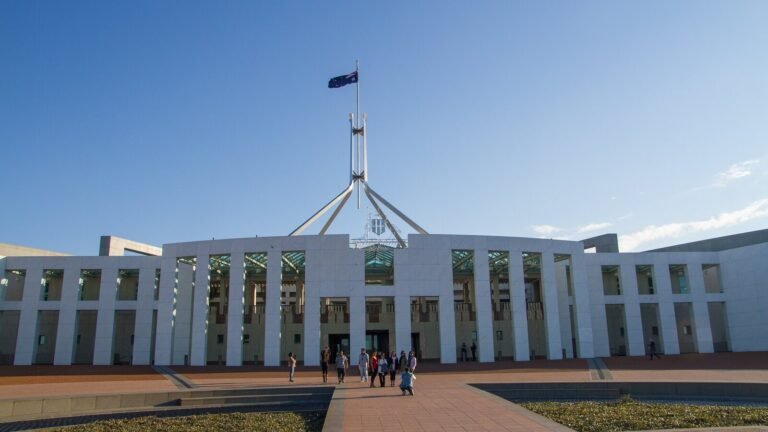
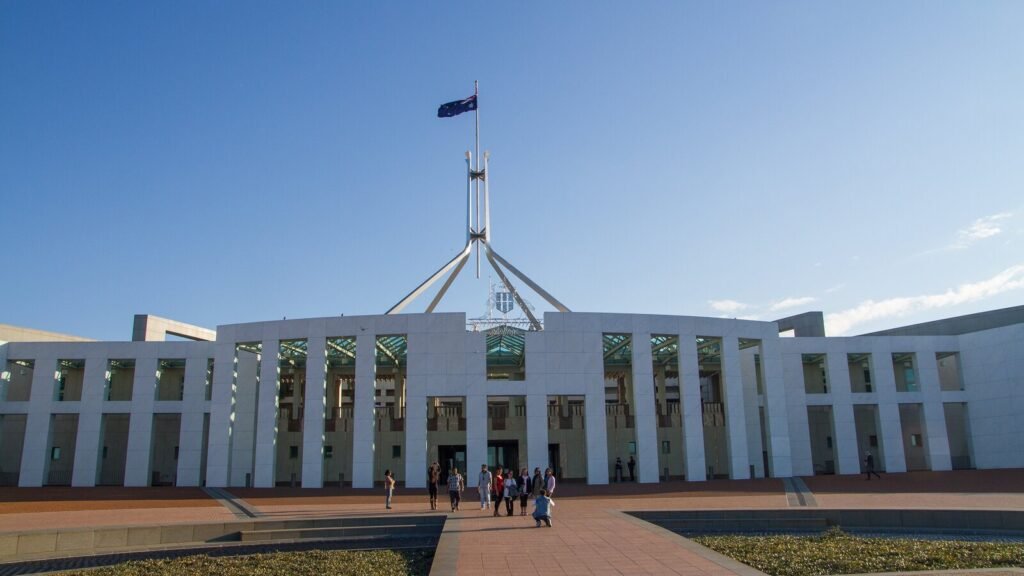
Image: Maksym Kozlenko / Wikimedia Commons / CC BY-SA 4.0 (cropped and resized)