Western Australia has set its sights on becoming the largest naval shipbuilding and maintenance hub in the Southern Hemisphere, an ambition explicitly written into the state government’s justification for its newly passed State Development Bill, which aims to fast-track approvals for strategically significant defence manufacturing projects. The goal reflects growing national emphasis on sovereign shipbuilding capability, alongside WA’s existing defence industry footprint and strategic geographic position facing the Indian Ocean.
Premier Roger Cook has consistently framed defence manufacturing as one of the clearest opportunities for WA to diversify its economy beyond traditional resources exports, arguing the sector offers the kind of secure, technically sophisticated, long-term industrial capability the state has sought to build for years.
Why Shipbuilding Capability Matters
Sovereign naval shipbuilding and maintenance capability has become an increasingly prominent national security priority for Australia, reflected in major federal investment in submarine and surface fleet programs over recent years. WA’s geographic position, closer to the Indian Ocean and South East Asia than the country’s established eastern-seaboard shipbuilding centres, gives the state a genuine strategic argument for hosting a greater share of the nation’s naval maintenance and shipbuilding activity, alongside its existing industrial capacity built up over decades servicing the resources and offshore oil and gas sectors.
Technical capability built through decades of complex offshore engineering and fabrication work in WA’s resources sector provides a foundation of relevant skills and infrastructure the state argues can be readily adapted toward naval shipbuilding and maintenance applications, reducing the scale of entirely new capability that would otherwise need to be built from scratch.
How the State Development Bill Helps
The newly passed State Development Bill’s streamlined approvals framework is specifically designed to accelerate strategically significant projects, including defence manufacturing developments, by coordinating across government agencies and providing greater certainty around approval timeframes. For an industry as capital-intensive and long-horizon as naval shipbuilding, predictable, faster regulatory pathways can materially improve a project’s commercial viability, making WA a more attractive location relative to competing jurisdictions both within Australia and internationally.
Building on Existing Defence Infrastructure
WA already hosts established defence industry infrastructure and expertise, providing a base the state government hopes to expand substantially as national defence spending priorities continue favouring sovereign shipbuilding and maintenance capability over reliance on overseas facilities. Industry analysts note that scaling existing defence infrastructure, rather than building entirely new capability from a standing start, generally offers a faster and lower-risk pathway toward achieving major new industrial capacity.
Competing With Established Shipbuilding States
WA’s ambitions place it in direct competition with South Australia, which has long positioned itself as Australia’s primary naval shipbuilding state through major submarine and frigate construction programs based in Adelaide. Whether WA can carve out a genuinely significant, complementary role alongside South Australia’s established shipbuilding industry, rather than competing for the same finite pool of federal defence investment, will likely shape how successfully the state’s ambitions translate into confirmed projects and jobs over the coming decade.
What Comes Next
With the regulatory groundwork now in place through the State Development Bill, WA’s naval shipbuilding ambitions will next depend on securing confirmed federal defence contracts and private investment commitments to justify the scale of infrastructure the state hopes to build. For a state whose industrial identity has long been defined by mining and resources, establishing genuine naval shipbuilding capability would represent a significant, tangible step toward the economic diversification successive WA governments have pursued for years, even as the timeline for realising that ambition remains measured in decades rather than years.
Infrastructure Requirements
Establishing genuine large-scale naval shipbuilding capability requires substantial supporting infrastructure beyond the shipyards themselves, including deep-water port access, specialised fabrication facilities and a dense local supply chain of component manufacturers and technical service providers. WA’s existing offshore oil and gas fabrication infrastructure, built up over decades, provides a partial foundation for this supporting ecosystem, though significant additional investment would likely be required to reach the scale envisioned under the state’s Southern Hemisphere ambitions.
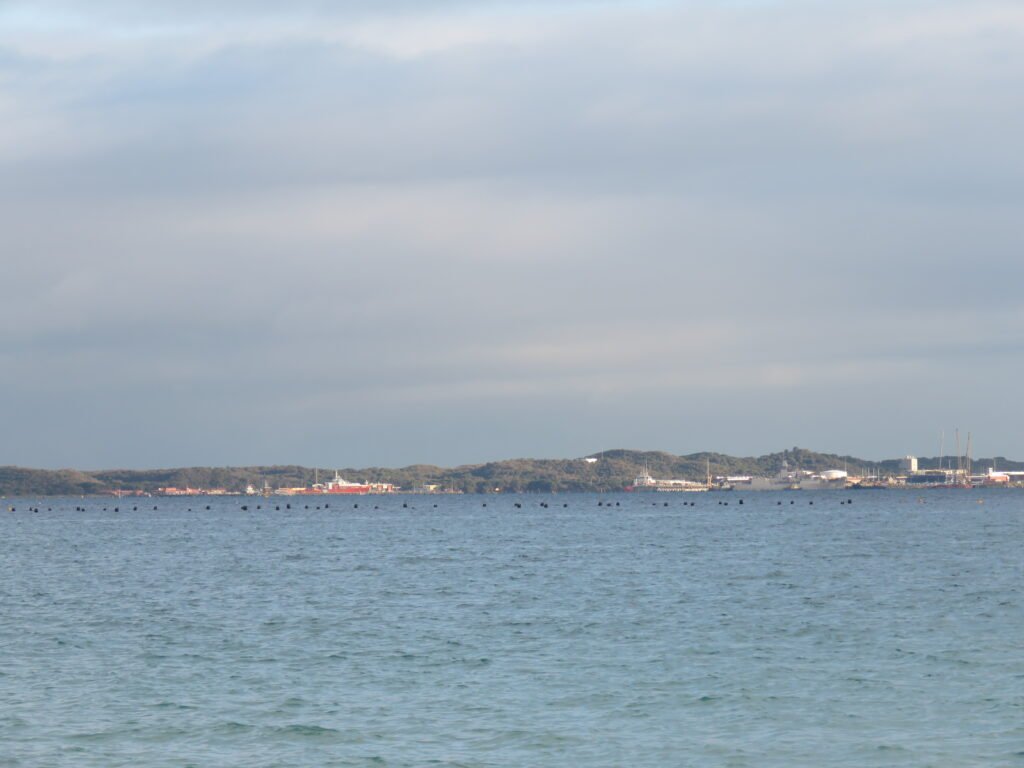
State planners have flagged Henderson, south of Fremantle, as a key existing marine and defence industrial precinct likely to play a central role in any expanded shipbuilding capability, building on infrastructure and expertise already established at the site over previous decades of naval and offshore industry activity.
Federal defence procurement decisions will ultimately play a decisive role in determining how much of Australia’s naval shipbuilding and maintenance workload flows to WA relative to South Australia and other potential locations, meaning the state’s ambitions remain partly dependent on decisions made well beyond its own direct control.
Even so, state officials remain confident WA’s strategic location and existing industrial base give it a genuinely competitive case to make, one they intend to press consistently as federal defence planning continues evolving over the coming years.
Local defence industry associations have welcomed the state’s ambitions as a validation of capability already built within WA’s marine and offshore engineering sector over many years.