
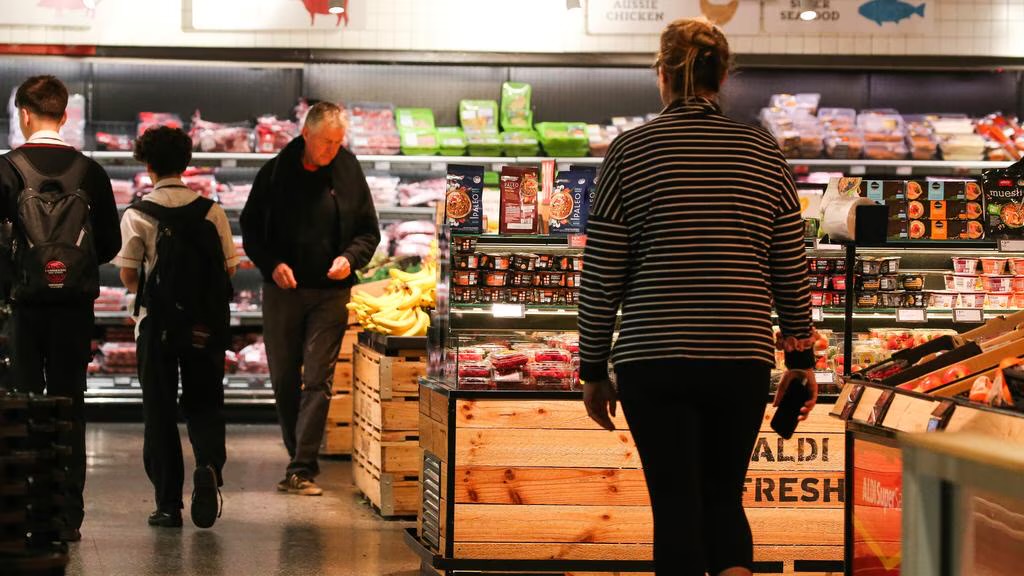
Grocery Price Jump Warning: Minister Cannot Rule Out 20% Increase Amid Iran War Uncertainty
A potential grocery price jump is raising fresh concerns for households, after a government minister warned that prices could rise by as much as 20 per cent due to the ongoing Iran war.
The grocery price jump warning comes as global supply chains face increasing pressure from rising fuel costs, disrupted trade routes, and uncertainty in energy markets. While officials say current forecasts suggest smaller increases, they have not ruled out a worst-case scenario if the conflict continues.
Grocery Price Jump Explained
The grocery price jump is being driven largely by the impact of the Iran war on global oil and fuel markets. With key shipping routes disrupted, the cost of transporting goods has increased significantly.
Fuel prices play a major role in food costs. From farming and production to transportation and retail, higher fuel expenses ripple through the entire supply chain. This is a major reason why experts say a grocery price jump could become unavoidable if the situation worsens.
According to recent reports, some industry groups are already warning that price increases could hit consumers within weeks if current conditions persist.
Why the Iran War Is Affecting Food Prices
The Iran war has disrupted one of the world’s most important energy corridors, the Strait of Hormuz, through which a large portion of global oil supply passes. This has led to sharp increases in fuel prices worldwide.
As fuel becomes more expensive, farmers face higher costs for machinery, fertilisers, and transportation. These added expenses are then passed along the supply chain, contributing to the grocery price jump.
Food producers and suppliers are also dealing with rising input costs, including fertiliser and energy, which further increases the likelihood of higher retail prices.
How Big Could the Grocery Price Jump Be?
While the government has acknowledged the possibility of a grocery price jump of up to 20 per cent, official forecasts currently suggest a more moderate increase of around 3 to 4 per cent.
However, officials stress that the situation remains unpredictable. The final impact will depend heavily on how long the conflict continues and whether global supply chains stabilise.
Experts warn that if fuel prices continue to rise sharply, the grocery price jump could exceed current expectations, especially for essential items like fresh produce, dairy, and meat.
Pressure on Supermarkets and Suppliers
Retailers are already feeling the pressure of the potential grocery price jump. Independent supermarkets in particular are struggling to absorb rising supplier costs while keeping prices stable for customers.
Some businesses are trying to hold prices down for as long as possible, but many admit this may not be sustainable if costs keep rising.
Large supermarket chains may have more flexibility, but even they are not immune to prolonged cost increases caused by global disruptions.
What It Means for Consumers
For households, a grocery price jump could add further strain to the cost-of-living crisis. Even small increases in food prices can have a significant impact, particularly for families already managing tight budgets.
If the situation worsens, consumers may need to adjust spending habits, switch to cheaper alternatives, or reduce non-essential purchases.
Economists note that food inflation is often one of the most noticeable and immediate effects of global conflicts, making the grocery price jump a key concern for policymakers.
Government Response to Grocery Price Jump Concerns
The government has indicated it is working with farmers, suppliers, and retailers to manage the impact of rising costs. Measures such as fuel relief and economic support are being considered to ease pressure on households.
Officials have also emphasised that while a major grocery price jump is possible, it is not guaranteed. Much will depend on how global markets respond in the coming weeks.
At the same time, policymakers are preparing for longer-term impacts, warning that even if conditions improve, the economic effects of the Iran war could linger.
The Bigger Picture
The grocery price jump warning highlights how global events can quickly affect everyday costs. What begins as a geopolitical conflict can rapidly translate into higher prices at the supermarket.
As the situation develops, both businesses and consumers will be watching closely. The uncertainty surrounding the Iran war means that price pressures could continue to evolve.
For now, the grocery price jump remains a possibility rather than a certainty. But with global markets under strain, many experts believe rising food costs are becoming increasingly difficult to avoid.
All rights belong to their respective owners. This article contains references and insights based on publicly available information and sources. We do not claim ownership over any third party content mentioned.