Published: October 12, 2026
The global artificial intelligence boom is reshaping business investment, from cloud-computing providers building specialised capacity to companies seeking faster access to advanced chips. Large funding plans show how strongly investors expect demand for AI computing to grow, but they also highlight the commercial challenge: companies must turn expensive infrastructure into dependable revenue before financing costs and competition erode returns.
Why AI infrastructure is attracting capital
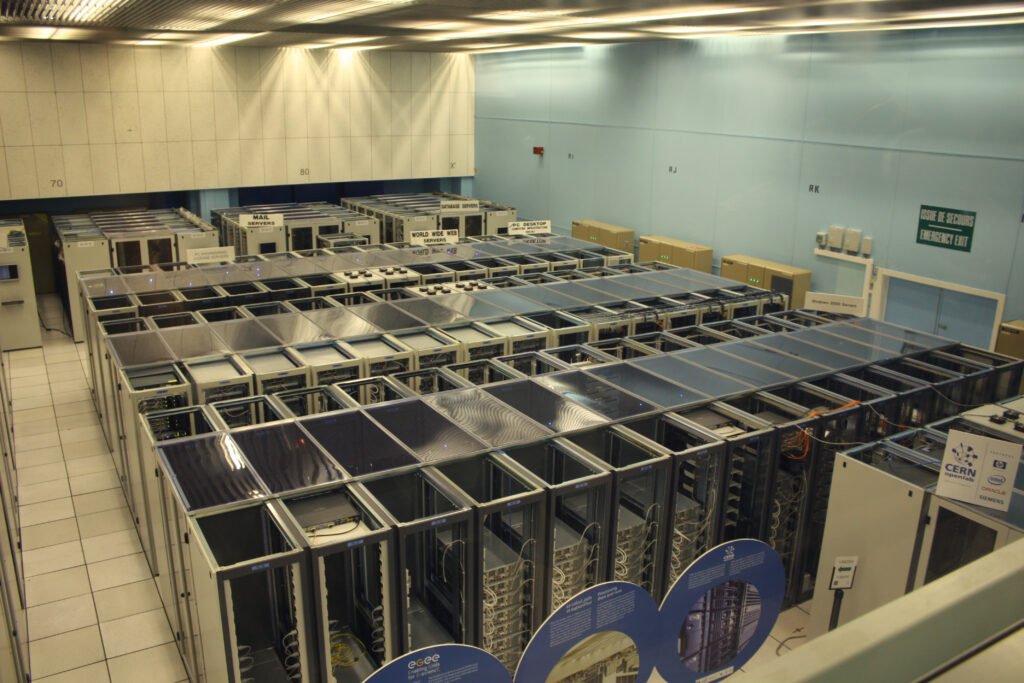
Modern AI systems require substantial computing resources for training and deployment. That has created demand for specialised cloud services, data centres, accelerators, networking equipment, electricity and cooling. Rather than building every component themselves, many developers rent computing capacity from providers that operate large clusters of chips.
This business model can scale quickly when customers need capacity before they can build it internally. It can also create considerable upfront spending. Providers must obtain hardware, secure sites, arrange power and connectivity, and maintain facilities that need specialised technical staff.
Funding illustrates investor confidence—and expectations
Recent reporting has highlighted plans by AI cloud-computing company Lambda to seek up to $4 billion in a funding round ahead of a planned public listing. The reported pre-money valuation and financing ambitions demonstrate how investors are assessing specialist infrastructure providers as part of the wider AI market. Such plans and valuations can change, and a planned IPO is not a guarantee of a successful listing or future performance.
More broadly, the IMF said on October 12 that investment in AI infrastructure was helping support global growth, while also warning that the technology could significantly reshape work and education. The macroeconomic picture reinforces the importance of AI, but it does not mean every company or investment will earn an attractive return.
The business case depends on utilisation
AI infrastructure is capital-intensive. A facility that is only partially used may struggle to cover its financing, energy, cooling, maintenance and depreciation costs. Providers therefore need contracts that give them confidence in future demand, but large customer commitments can themselves create concentration risk if a small number of buyers account for most revenue.
Customers also have choices. They may use a large cloud platform, a specialist provider, their own equipment or smaller models that require less computing power. Businesses buying capacity should compare the full cost of running a workload, including data transfer, storage, security, staff time and service reliability, rather than choosing solely on headline computing prices.
Energy and infrastructure are strategic constraints
Electricity access is increasingly central to data-centre planning. A project can have funding and hardware yet still face delays if power connections, cooling systems, permits or grid capacity are insufficient. Communities and regulators may also scrutinise water use, land requirements, emissions and the impact on local energy prices.
These constraints can create opportunities for businesses in power generation, grid equipment, cooling, efficiency and site development. They also mean that forecasting AI demand requires more than tracking software adoption. Investors need to understand physical infrastructure timelines and the risk that anticipated capacity will become available later than planned.
Debt and valuation risks require attention
When demand grows rapidly, firms may be tempted to borrow heavily to expand before competitors do. But borrowing creates fixed obligations even if customer demand disappoints, prices fall or a new generation of hardware makes existing equipment less attractive. Technology changes quickly, making the useful life and resale value of expensive assets uncertain.
Investors should examine cash flow, financing terms, customer concentration, hardware refresh cycles, power costs and the gap between committed spending and contracted revenue. A high valuation may reflect strong expectations rather than profits already achieved. Private funding headlines are useful indicators of interest, but they are not substitutes for audited financial information.
How customers can buy AI capacity more carefully
Businesses adopting AI can reduce risk by starting with measurable use cases, comparing providers and monitoring results. Pilots should establish whether AI improves productivity, quality or customer experience enough to justify its direct costs and the work needed for integration, governance and staff training.
Procurement teams should also review data handling, uptime commitments, exit arrangements and the ability to transfer workloads. Dependence on a single supplier may be efficient initially but expensive to reverse later. A flexible architecture and clear data-export provisions can help maintain bargaining power.
Competition may reward efficiency, not scale alone
Infrastructure scale matters, yet it is not the only source of advantage. Some customers need specialised models, regional data handling, low latency or predictable costs more than the largest possible computing cluster. Providers that serve clear needs reliably may compete effectively against bigger rivals.
Smaller and more efficient AI models could also change demand patterns by making some tasks cheaper to run. That would not necessarily reduce total computing demand, because lower costs can encourage broader use, but it could shift which providers and hardware configurations are most valuable.
What businesses should watch next
Key indicators include new customer contracts, the speed at which capacity is deployed, data-centre power availability, funding costs and evidence of repeatable margins. Announced funding rounds and IPO plans can signal confidence, while earnings and cash-flow results reveal whether that confidence is becoming a sustainable business.
The AI infrastructure boom is a genuine commercial opportunity, but growth alone does not guarantee success. Companies that align investment with confirmed demand, manage debt prudently and deliver measurable customer value will be better positioned than those that rely on ever-rising valuations to justify expansion.
Sources for context: Reuters reporting on IMF meetings, October 12, 2026, and Reuters/Wall Street Journal reporting on Lambda’s funding plans, October 6–7, 2026.
All rights belong to their respective owners. This article contains references and insights based on publicly available information and sources. We do not claim ownership over any third-party content mentioned.