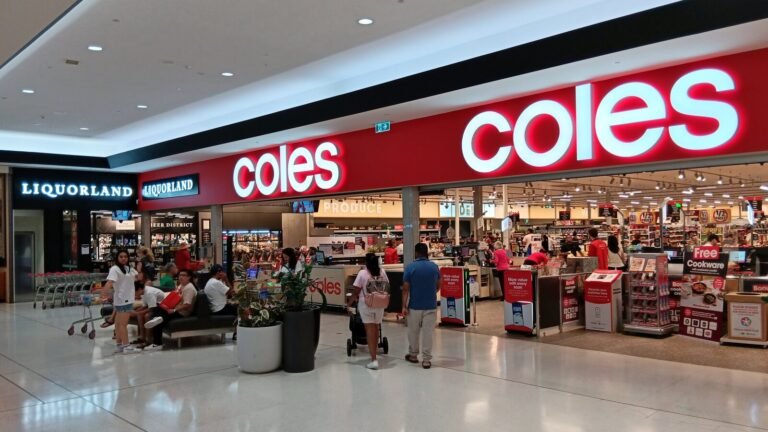
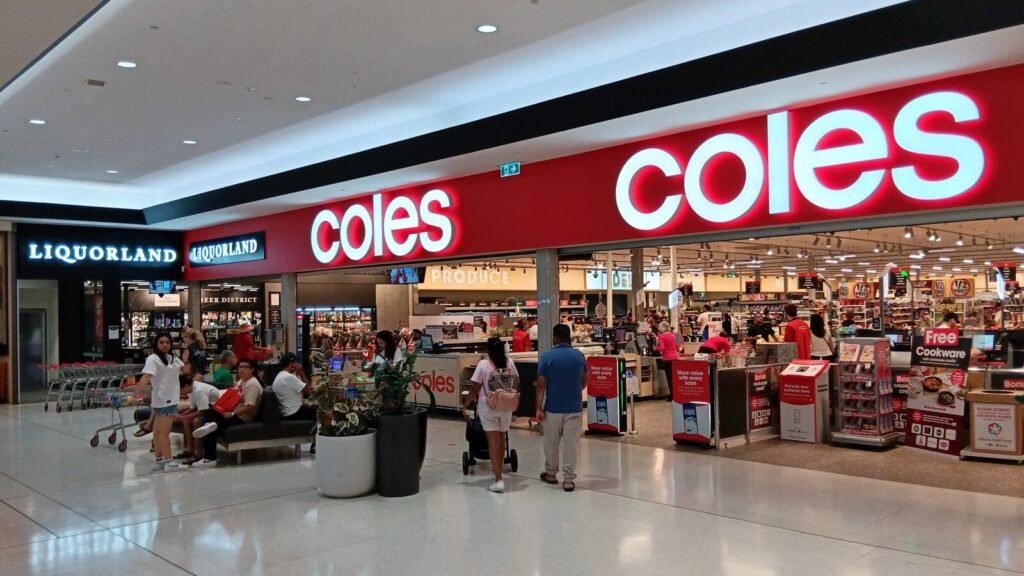
Coles shares plunged after the supermarket giant warned that first-half supermarket earnings would be flat, a result that fell well short of what the market expected. The stock fell by as much as about 12% in early trade on Friday 30 October, and finished the day about 7.7% lower at $21.66, according to Investing.com.
Coles blamed price investment, heavier competitor promotions and higher fuel costs. Here is what the company said, how rival Woolworths compares, what analysts think and what it could mean for shoppers and investors.
What Coles told the market
Coles reported first-quarter group sales up 2.2% to $11.2 billion, with its core supermarkets segment up 3.6%, according to Capital Brief. Comparable supermarket sales rose 2.7%, a sharp slowdown from 4.6% in the same period a year earlier, Investing.com reported.
The headline was the outlook. Coles said it expects first-half supermarkets earnings before interest and tax (EBIT) to be flat at about $1.23 billion, according to Market Index. UBS had expected about $1.32 billion, so the guidance was roughly 7% below forecasts. Coles also said sales growth moderated over the first four weeks of the second quarter, and that it is relaunching its Every Day Price program to regain momentum.
Chief executive Leah Weckert said the company was encouraged by strong e-commerce growth, continued gains in its Exclusive to Coles range and progress on its capital investment program.
Why Coles shares plunged
Several pressures are squeezing the supermarket’s margins at the same time:
- Price investment: Coles is cutting prices to defend market share. Citi analyst Adrian Lemme said the downgrade appeared driven by price investment because supermarket sales have been affected by Woolworths’ pricing strategies, according to BigGo Finance.
- Competitor promotions: Heavier promotional activity across the sector is forcing Coles to spend more to keep shoppers.
- Fuel costs: Coles said fuel prices have risen over the past two months, which it linked to geopolitical uncertainty, and that it expects higher fuel-related costs in the first half.
- Cost-of-living pressure: Shoppers are being more careful with their spending, Capital Brief reported.
- Operating deleverage: Jefferies analyst Michael Simotas said price investment combined with operating deleverage and higher fuel costs implies a meaningful consensus downgrade.
How Woolworths compares
The update also highlighted a growing gap with Woolworths. Investing.com reported that Woolworths posted Australian Food sales growth of 6.9% earlier in the week, more than four percentage points ahead of Coles’ comparable growth. Woolworths shares rose about 1.9% on Friday while the consumer staples sector was dragged down almost entirely by Coles.
For the full 2026 financial year, Woolworths reported group sales of $71.5 billion, up 3.6%, and earnings before interest and tax before significant items up 12.7% to $3.1 billion, according to Kalkine.
What analysts are saying
RBC Capital Markets analyst Michael Toner called it a disappointing update, pointing to implied supermarket share losses and a first-half EBIT downgrade. Jefferies expects the shares to trade weakly. According to The Bull, the average analyst price target of $24.23 predates the guidance, so broker forecasts are likely to be cut. These are individual broker views, not recommendations, and other analysts may disagree.
A softer backdrop for retail
Coles is not the only retailer navigating a tougher consumer. Perth-based Wesfarmers reported 2026 net profit after tax of $2.9 billion, up 8.3%, at its annual general meeting on 29 October. Morgans said the AGM trading update was slightly weaker than expected and noted that the consumer backdrop is softening amid higher interest rates, weaker housing conditions and declining sentiment, although it believes Wesfarmers’ retail brands remain well positioned, as The Motley Fool reported. Wesfarmers shares rose by roughly 3% to 4% in Friday trading.
Household budgets are also under pressure from interest rates. The Reserve Bank lifted the cash rate to 4.60% on 29 September, and its next decision is due on 3 November.
How it fits into the cost-of-living debate
The Coles warning lands as politicians argue over grocery prices. As we reported in our coverage of Labor’s cost-of-living pressure, Labor MP Ed Husic has accused supermarkets of profiteering and floated price caps, an idea ministers have not backed. The Coles update shows that price competition is hitting profit at one major chain, but it does not settle the wider arguments about overall supermarket margins.
What it means for shoppers and investors
For shoppers, the relaunched Every Day Price program could mean lower prices on some items, although it is too early to know how broad the cuts will be. Comparing unit prices across stores remains the best way to check value. For investors, forecasts are likely to be revised and the share price may stay volatile. Many Australians hold Coles indirectly through superannuation. This article is general information only and is not financial advice.
What to watch next
- Analyst forecast revisions: How far brokers cut their first-half and full-year estimates.
- Second-quarter trading: Whether Every Day Price lifts volumes enough to offset lower margins.
- Woolworths’ response: Whether it keeps its pricing advantage and market share gains.
- Fuel prices: Whether cost pressures ease or worsen.
- Interest rates: The RBA’s decision on 3 November and its effect on consumer spending.
For another example of market volatility, see our report on the ASX takeover wave, or browse our business news.
Frequently asked questions
Why did Coles shares fall?
Coles said it expects flat first-half supermarket earnings because of price investment, heavier competitor promotions and higher fuel costs. That was well below what analysts had forecast.
How much did Coles shares fall?
They dropped by as much as about 12% during the session on 30 October and closed about 7.7% lower at $21.66, according to Investing.com.
Is Woolworths performing better than Coles?
In the latest quarter, yes. Woolworths reported Australian Food sales growth of 6.9% compared with comparable supermarket growth of 2.7% at Coles.
What is Every Day Price?
It is a Coles pricing program that the company is relaunching to lower prices on everyday items and win back sales momentum.
Image: Bahnfrend / Wikimedia Commons / CC BY-SA 4.0 (cropped and resized)