The Mistral Large 4 open weights are now a free download, putting a trillion-parameter AI model in the hands of anyone with the hardware to run it. French AI lab Mistral released the weights on Hugging Face on 29 October 2026, three weeks after unveiling the model as an API-only preview, and says the new version is the strongest open model for agentic coding and cyber defence.
The release raises big questions for developers, businesses and security teams. Here is what is in the download, how the claims stack up, what the licence allows and why cybersecurity experts are watching closely.
What the Mistral Large 4 open weights include
Mistral Large 4, nicknamed Le Chonk, is a multimodal model with about 1 trillion parameters, of which roughly 52 billion are active at a time, according to the Hugging Face announcement. It supports a context window of around one million tokens. The weights can be downloaded without an approval step, and the model is also available through Mistral’s API and can be deployed on your own infrastructure using tools such as vLLM or SGLang, according to Mistral.
The improved version follows three extra weeks of reinforcement learning guided by customer feedback, The Next Web reported. Mistral says the model offers three reasoning modes so users can balance cost against performance.
The benchmark claims
Mistral’s case rests mainly on coding. On Terminal-Bench 4.0, which tests agentic coding in a terminal, the model rose from 28% at preview to 41%, just ahead of the rival open model GLM-5.3 at 40%. On the Artificial Analysis Coding Agent Index it is roughly tied with GLM-5.3 while using 47% fewer tokens per task, a saving that adds up when coding agents run for hours. Hugging Face’s own write-up quotes slightly different figures, including 61.7% on DeepSWE v1.1.
On cybersecurity, Mistral says Large 4 leads open models on the Artificial Analysis Cyber Index, while Hugging Face describes it as among the top five models globally. Mistral also says the model declines an average of 96.6% of harmful requests across three safety tests, the highest among open models.
A note of caution is warranted. Most of these numbers are Mistral’s own, on benchmarks it chose, and outside testing has barely started. On Artificial Analysis’s overall intelligence index, Hugging Face places the model fifth among open models, not first, according to Martin Cid’s analysis.
What the licence allows
The weights are released under the Mistral Ecosystem Open-Weight License, a modified version of the permissive MIT licence. In practice:
- Allowed: Free use, fine-tuning and building commercial products.
- Restricted: Companies that sell the model as a hosted service need a separate commercial licence from Mistral.
- Not the same as open source: Open weights mean you can download and run the model, but that is not necessarily the same as every part of the system being open source. Read the licence before building a product on it.
What it takes to run
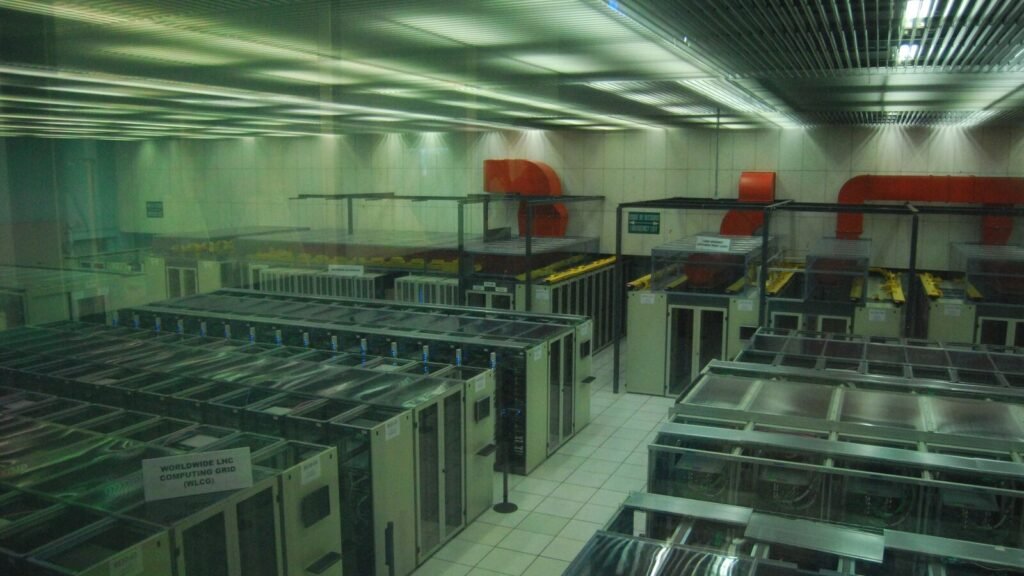
The download is free, but the hardware is not. Hugging Face recommends datacentre-class Nvidia GPUs, and reports show that heavily compressed versions can run on high-end consumer machines. A 2-bit build ran at about 15 tokens a second on an older Apple M3 Ultra Mac Studio, which is fine for chat but slow for long coding jobs. On four Nvidia RTX 6000 Pro cards with very long documents, output dropped to about 3 tokens a second. For most small businesses, using the model through a cloud provider or Mistral’s API will be more practical.
The cybersecurity double edge
Cyber skills are both the model’s selling point and its biggest question mark. Mistral wrote that during the preview it saw signs that the model could be misused in harmful ways, and that it is tightening its guardrails. But public weights can be downloaded and modified by anyone, so safeguards built into the model can be removed by people who retrain it.
The same tension runs through today’s security news. As we reported in our coverage of the PHP2Shell vulnerability, AI tools were used to find serious flaws in widely used software, and both defenders and criminals are working out how to use the same capabilities. A capable open model gives defenders a free tool, and it also makes those capabilities available to everyone.
Why it matters for Australian organisations
Running a model on your own servers can help with data sovereignty and cost control, because sensitive information does not need to leave your environment. It can also reduce reliance on a single provider. Those benefits come with responsibilities, including securing the infrastructure, complying with the licence and testing the model for your own use case. This article is general information, not technical or legal advice.
What to watch next
- Independent evaluations: Whether third-party testing confirms Mistral’s benchmark claims.
- Modified versions: How quickly the community releases variants, including ones that change the safety settings.
- Competing open models: Whether rivals such as GLM-5.3 respond with updates.
- Security guidance: Whether agencies issue advice on the risks of open, cyber-capable models.
Frequently asked questions
Is Mistral Large 4 free to download?
Yes. The weights are available from Hugging Face without an approval step, under the Mistral Ecosystem Open-Weight License.
Can I run Mistral Large 4 on a laptop?
Not in any practical way. The full model needs datacentre-class GPUs, and even compressed versions need very high-end hardware.
Is Mistral Large 4 open source?
It is open weight under a modified MIT licence, which includes a restriction on selling the model as a hosted service. That is not the same as being fully open source.
Who makes Mistral Large 4?
It was made by Mistral AI, a Paris-based AI company.
Image: Sashimi-b / Wikimedia Commons / CC BY 4.0 (cropped and resized)