Western Australia’s lithium industry, once the fastest-growing corner of the state’s resources sector, is working through a prolonged period of price volatility that has forced some of the world’s largest producers to scale back or pause major WA operations. BHP suspended its Nickel West operations from October 2024, Tianqi Lithium halted phase two construction at its Kwinana processing plant in January 2025, and Albemarle placed its lithium hydroxide refinery at Kemerton into care and maintenance in February 2026, a string of setbacks that has tested confidence in a sector still widely regarded as central to WA’s long-term economic diversification.
Despite the near-term pain, longer-term prospects for the battery and critical minerals sector remain broadly positive, according to state government analysis, buoyed by continued global demand growth for battery materials and a landmark bilateral agreement between Australia and the United States signed in October 2025.
Why the Sector Hit Turbulence
WA is by far the world’s largest lithium supplier, accounting for the majority of global supply and effectively all of Australia’s lithium production. That dominant market position, built up rapidly during the lithium boom of the early 2020s as global electric vehicle and battery storage demand surged, left the sector particularly exposed when global lithium prices fell sharply from their earlier peaks, squeezing margins across the WA supply chain from mine sites through to downstream processing facilities.
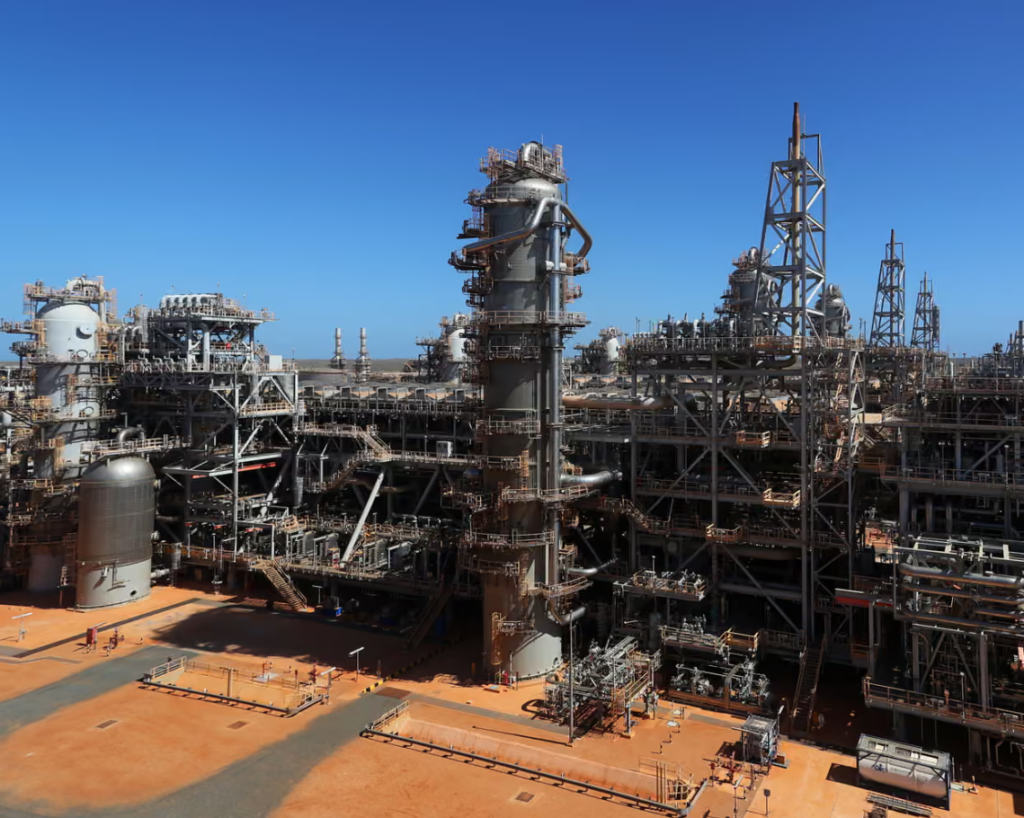
Processing operations, including lithium hydroxide refineries like Kemerton and Kwinana, have proven particularly vulnerable during the downturn, given their high capital and operating costs relative to simpler mine-and-ship spodumene concentrate operations, explaining why several major processing project pauses have featured prominently among the sector’s recent setbacks.
State Government Support Measures
In response to the challenging conditions, the WA Government has introduced targeted support measures including the Lithium Industry Support Program and a no-interest loan initiative for the nickel industry, aimed at helping affected companies weather the current downturn without permanently losing capacity that would be costly and slow to rebuild once market conditions eventually improve. These support measures reflect a broader state government view that lithium and battery minerals represent a genuinely strategic long-term industry for WA, worth supporting through a cyclical downturn rather than allowing capacity to be lost entirely.
The Australia-US Critical Minerals Framework
A significant boost to the sector’s longer-term outlook came with the signing of the Australia-US critical minerals framework in October 2025, an agreement committing at least US$2 billion to fast-track an US$8.5 billion project pipeline supporting defence and advanced technology applications. For WA producers, the framework offers the prospect of deeper integration with US supply chains at a time when Western governments have increasingly prioritised reducing reliance on Chinese-controlled critical minerals processing for strategic and defence-related applications.
Industry figures say the framework, combined with growing recognition in Washington and Canberra of the strategic importance of secure critical minerals supply chains, could provide a meaningful tailwind for WA’s lithium and battery minerals sector over the coming years, even as near-term pricing conditions remain challenging for individual producers.
What Comes Next for WA’s Battery Minerals Sector
For now, the sector remains in a genuine holding pattern, with major processing assets sitting in care and maintenance while producers wait for prices to recover to levels that justify restarting suspended operations. State government analysis continues to frame the current downturn as cyclical rather than structural, pointing to the fundamental long-term growth trajectory of global battery demand as the basis for continued optimism about WA’s position as the world’s dominant lithium supplier, even as the path through the current price trough tests the resilience of individual companies and projects along the way.
WA continues to hold its position as the world’s largest lithium supplier by a substantial margin, a scale advantage that analysts say gives the state a structural resilience even through periods of price weakness that smaller or higher-cost producers elsewhere in the world may struggle to match, potentially positioning WA to emerge from the current downturn with an even larger relative share of global supply once demand recovers.
Jobs and Communities Affected
The processing plant pauses have had real consequences for workers and the regional communities connected to these operations, with care and maintenance decisions typically involving significant workforce reductions even when companies retain a smaller retained team to preserve the asset for an eventual restart. Local suppliers and contractors servicing the affected operations have also felt the flow-on impact, a familiar pattern in resource-dependent regional economies that have experienced similar boom-and-pause cycles across other commodities in the past.
State and local government support services have worked with affected companies to help connect displaced workers with opportunities in other parts of WA’s resources sector, which continues to report skills shortages across a range of trades and technical roles despite the localised disruption within the lithium and nickel processing segment specifically.
Whether the current pause proves temporary, as government and industry both hope, will likely depend heavily on how quickly global lithium demand growth reasserts itself against the current oversupplied market conditions that have driven prices down over the past two years.