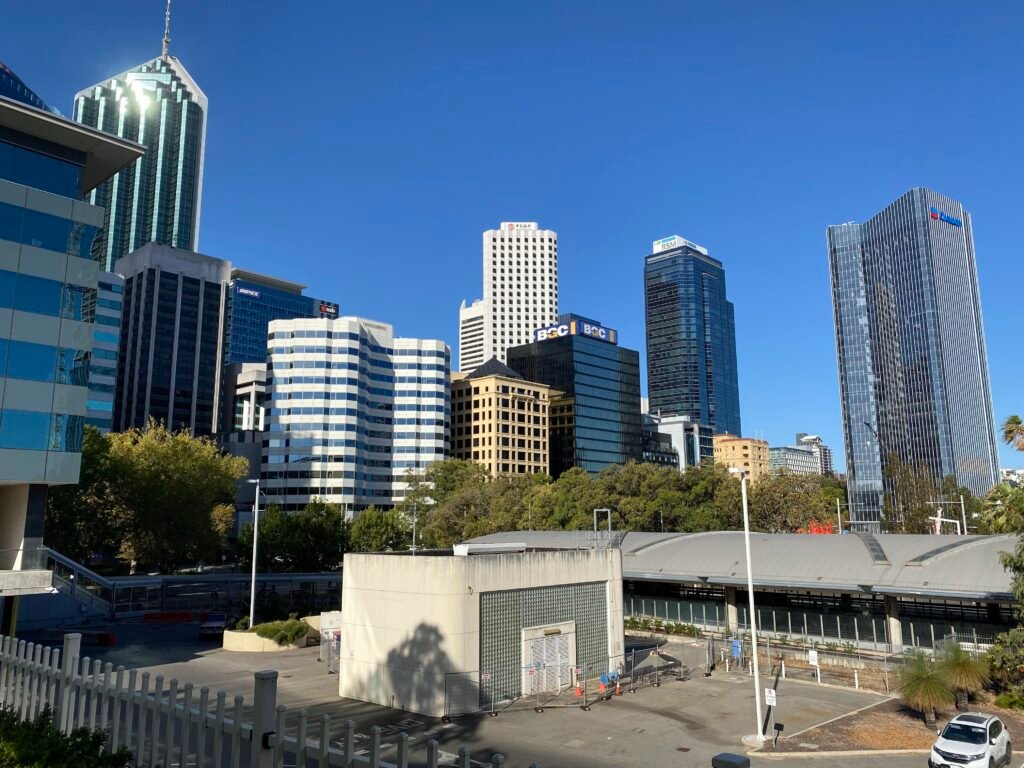
Perth’s CBD office market has entered an unprecedented drought of new supply, with no major office construction projects currently underway in the city centre and none expected to be completed for at least three years. Despite the constrained pipeline, vacancy rates have continued to tighten, with the Property Council’s latest Office Market Report recording a modest drop in CBD vacancy, driven by centralisation and expansion activity from larger occupiers.
The combination of essentially zero new supply and steadily improving demand marks a distinctive moment for Perth’s office market, which has spent much of the past decade grappling with elevated vacancy left over from the mining construction boom of the 2010s, when a wave of speculative office development significantly outpaced tenant demand.
The Numbers Behind the Tightening
Recent market data shows Perth CBD office vacancy easing to around 15.4 per cent by the first half of 2026, down from 16.9 per cent at the end of the previous year, with prime grade vacancy falling even more sharply to 13.7 per cent. Leasing volumes have also picked up meaningfully, with roughly 35,300 square metres leased across 25 transactions in the second quarter of 2026 alone, more than double the volume recorded in the same quarter a year earlier.
Prime CBD rents have continued to grow steadily through the tightening cycle, reaching an average of $752 per square metre, up 4.3 per cent on the year, while incentives offered to tenants have remained relatively stable rather than climbing further, a signal that landlords are gaining increasing confidence in the market’s trajectory.
Why No New Buildings Are Being Built
Despite improving fundamentals, developers remain reluctant to commit to new speculative CBD office construction, a reluctance industry analysts attribute to elevated construction costs, higher financing costs in the current interest rate environment, and lingering caution stemming from the prolonged oversupply that followed the previous construction boom. Property Council WA figures show 11 projects with development approvals already in place, representing nearly 300,000 square metres of potential future office space, but analysts say substantial pre-commitment from tenants will likely be required before any of these projects proceed to construction.
Perth’s CBD office vacancy rate remains the second-highest among Australian capital cities, behind only Melbourne, meaning the current tightening trend still has considerable room to run before the market reaches historically balanced vacancy levels, even without any new supply entering the pipeline over the coming years.
What It Means for Businesses and Investors
Property Council WA Executive Director Nicola Brischetto has described the current environment as presenting a unique opportunity for businesses looking to centralise their operations in the CBD, given the combination of still-available stock and improving market fundamentals, before the current supply drought potentially translates into a sharper squeeze on available space and rising rents in coming years.
For investors, the tightening market has begun translating into renewed transaction activity after a prolonged period of subdued dealmaking, with 2026 investment volumes already surpassing the totals recorded across the previous two full years combined, including the CBD’s first major office sale since 2024. Prime CBD office yields have softened slightly after holding flat for nearly two years, a shift some analysts interpret as investors beginning to price in the improving fundamentals of a market entering a genuine, multi-year supply-constrained cycle.
Outlook for Perth’s Office Market
With the state’s economy continuing to perform strongly and no meaningful new office supply on the horizon, market forecasters expect Perth’s CBD vacancy rate to continue declining steadily over coming years, with some projections suggesting vacancy could fall to around 10.4 per cent by the end of the decade. Property Council WA has pointed to the influx of student accommodation and other city-shaping projects underway as further evidence of Perth’s broader momentum, describing the current period as an exciting time for the city’s built environment even as the office sector itself remains in an unusually prolonged construction lull.
A Contrast With Other Capital Markets
Perth’s current office market trajectory stands in notable contrast to Sydney and Melbourne, where new supply additions have generally outweighed positive net absorption, keeping vacancy rates elevated in those larger markets even as demand has also shown signs of recovery. Perth was one of only two capital city office markets nationally, alongside Canberra, to record a decline in vacancy over the most recent reporting period, a distinction property analysts attribute largely to the near-total absence of new competing supply entering the Perth market.
That contrast has not gone unnoticed by interstate investors and fund managers, some of whom have begun reassessing Perth’s relative attractiveness within national office portfolio allocations, given the more favourable supply-demand dynamics currently on offer compared to the larger eastern seaboard markets.
Tenants weighing office decisions in the current market face a genuine trade-off: acting now to secure space and relatively favourable incentive packages before the supply drought translates into a sharper rental squeeze, or waiting to see whether any of the approved but unbuilt projects eventually reach construction and add meaningful new choice back into the market over the coming years.