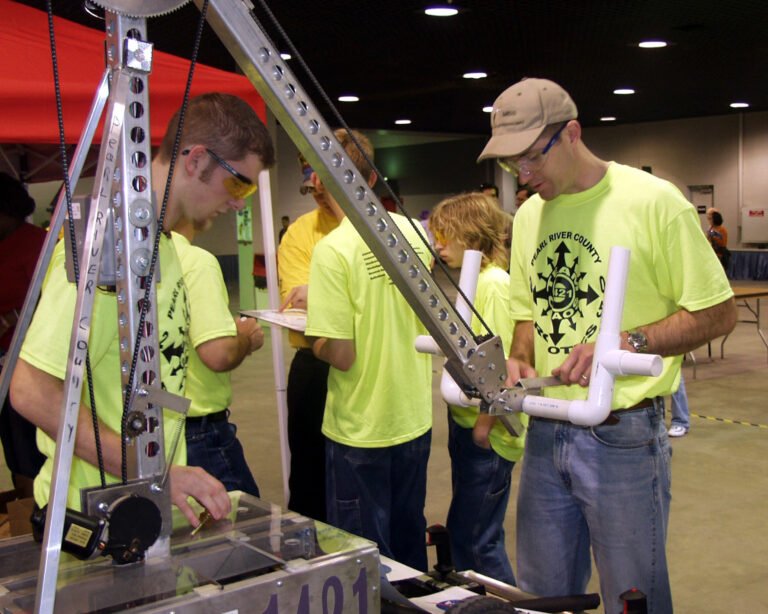
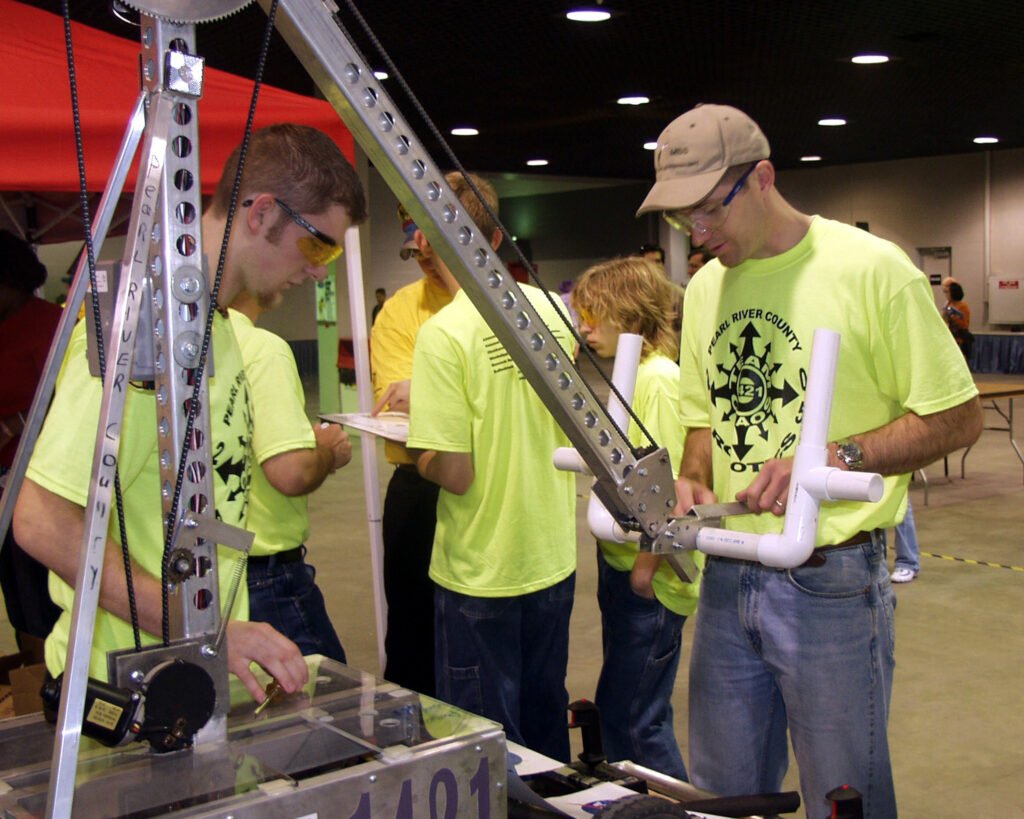
More than 350 Western Australian secondary school students went head to head at the WA Robotics Playoffs and Innovation Challenge, held at Curtin Stadium as part of National Science Week, in an event organisers say is increasingly important for building the state’s future pipeline of STEM-qualified workers. The competition brought together teams from Perth metropolitan schools and regional colleges alike, reflecting growing interest in robotics and engineering pathways across the state’s secondary education system.
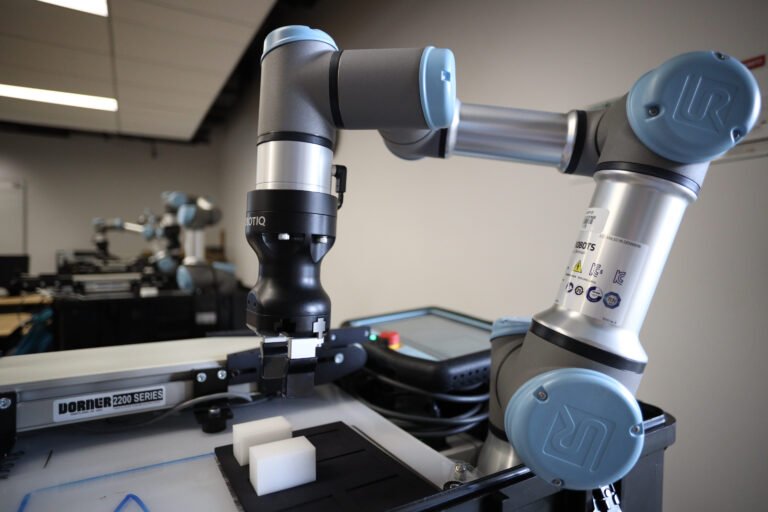
This year’s Robotics Playoffs carried the theme REBUILT, chosen to reflect the many technological functions now common across primary industries, including precision seeding, automated harvesting and spraying, material handling, warehousing automation and autonomous vehicle systems, all areas where WA’s resources and agricultural sectors are increasingly investing.
How the Competition Works
A total of 27 teams from 22 schools competed in the Robotics Playoffs, where students built robots designed to collect, transport and place game pieces on a competition field before climbing and hanging from structures to score additional points. Teams competed in groups of three, forming strategic alliances with other schools to progress through to the finals, a format designed to build collaboration and strategic thinking skills alongside the core engineering and programming challenge.
Running alongside the Robotics Playoffs, the DPIRD Innovation Challenge saw 42 teams from 13 schools tackle three separate real-world primary industries scenarios, requiring students to develop practical technology-based solutions to problems facing the agriculture, mining and resources sectors, giving participants direct exposure to the kind of applied problem-solving expected in modern STEM careers.
Regional Schools Punching Above Their Weight
Regional participation was a notable feature of this year’s event, with competitors travelling from Bunbury Baptist College, John Paul College, Eastern Goldfields College and Mount Barker Community College to take part alongside metropolitan schools. For regional students, competitions like the Robotics Playoffs offer a rare opportunity to engage directly with university-level engineering facilities and mentors, a level of exposure that can be harder to access outside the Perth metropolitan area.
This year’s winning alliance was led by Alliance Captain Team 9991 from Bunbury Senior High School, joined by Curtin University’s Team 4788 and Carine Senior High School’s Team 9987, a result that underscored the strength of the South West region’s growing robotics program alongside established metropolitan competitors.
Why Events Like This Matter for WA’s Economy
The event was supported by the Department of Primary Industries and Regional Development alongside Curtin University and Murdoch University, reflecting a deliberate effort to connect secondary students with both industry and higher education pathways at an early stage. Organisers say building interest and capability in robotics and automation among school-aged students is directly relevant to WA’s long-term workforce needs, particularly as the state’s resources, agriculture and advanced manufacturing sectors continue to adopt automation and robotics technology at a rapid pace.
With reports of persistent skills shortages across engineering and technical trades continuing to circulate through WA’s business community, programs that expose students to hands-on robotics and engineering experience well before they reach university or vocational training are increasingly viewed by educators and industry groups as a genuinely useful part of the long-term solution, rather than just an extracurricular novelty.
Looking Ahead
Participating schools and event organisers have flagged plans to grow next year’s Robotics Playoffs and Innovation Challenge further, with hopes of attracting even greater regional participation given the strong showing from South West and Goldfields schools this year. For the hundreds of students who took part, the event offered far more than a one-off competition day: a tangible first taste of the kind of engineering, robotics and problem-solving careers increasingly in demand across Western Australia’s evolving economy.
Building a Long-Term Talent Pipeline
Teachers involved in coordinating school robotics programs say the biggest challenge is not student enthusiasm, which organisers describe as consistently strong, but rather securing ongoing funding and mentor availability to sustain programs year after year, particularly in regional schools with smaller budgets and fewer staff with specialist robotics or engineering backgrounds. Partnerships with universities and industry sponsors have become an increasingly important way of bridging that gap, providing both equipment and volunteer mentoring support that individual schools often could not fund on their own.
Curtin and Murdoch University staff who volunteered as mentors and judges at this year’s event said the competition also gives them an early opportunity to identify and encourage promising students toward engineering and technology degree pathways, well before those students begin making decisions about post-school study options, a form of early outreach universities increasingly see as valuable for building long-term interest in STEM fields among school-aged students across the state.
Parents of participating students have also praised the event for giving teenagers a concrete, hands-on sense of what engineering and robotics careers actually involve day to day, something educators say is often missing from more abstract classroom discussions about future STEM career options.
Organisers say next year’s competition is already expected to grow further, with additional regional schools registering interest after hearing about this year’s event from participating students and teachers.